When Was the 3D Printer Invented? The Complete History of Additive Manufacturing
The first 3D printer was invented in 1984 by Chuck Hull. Discover the full history of additive manufacturing, from Dr. Kodama's early concepts and the 2009 patent expiration to the rise of modern high-speed, multi-functional desktop machines.

If you recently unboxed your first desktop 3D printer, you might assume the technology is relatively new. It feels futuristic to watch digital files materialize into physical objects right on your desk. However, the true history of 3D printing goes back much further than the consumer boom of the 2010s.
So, when was the 3D printer actually invented? The first 3D printer was invented in 1984 by Chuck Hull, who later patented the technology in 1986. It can be surprising to learn that additive manufacturing is a 40-year-old technology. To understand how massive, million-dollar industrial machines eventually evolved into the sleek desktop units we use today, let's explore the fascinating timeline of 3D printing.
The 1980s: The True Origins of 3D Printing
The 1980s were a pivotal decade for manufacturing. While traditional subtractive methods (like CNC machining) were the industry standard, a few visionary engineers began asking: What if we built objects layer by layer instead of cutting material away?
1981: Dr. Hideo Kodama’s Missed Opportunity
The conceptual birth of 3D printing actually happened three years before Chuck Hull's invention. In 1981, Dr. Hideo Kodama of the Nagoya Municipal Industrial Research Institute published a paper detailing a rapid prototyping system. His idea involved using a UV light to harden photosensitive polymers layer by layer.
Unfortunately, Dr. Kodama failed to file the full patent requirements before his one-year deadline, and his groundbreaking concept was never officially credited as the first patented 3D printer.
1984: Chuck Hull and the Birth of SLA
In 1984, an American engineer named Chuck Hull successfully filed a patent for a process he called Stereolithography (SLA). Hull’s machine used a UV laser to trace shapes into a vat of liquid photopolymer resin, curing it into solid plastic layer by layer.
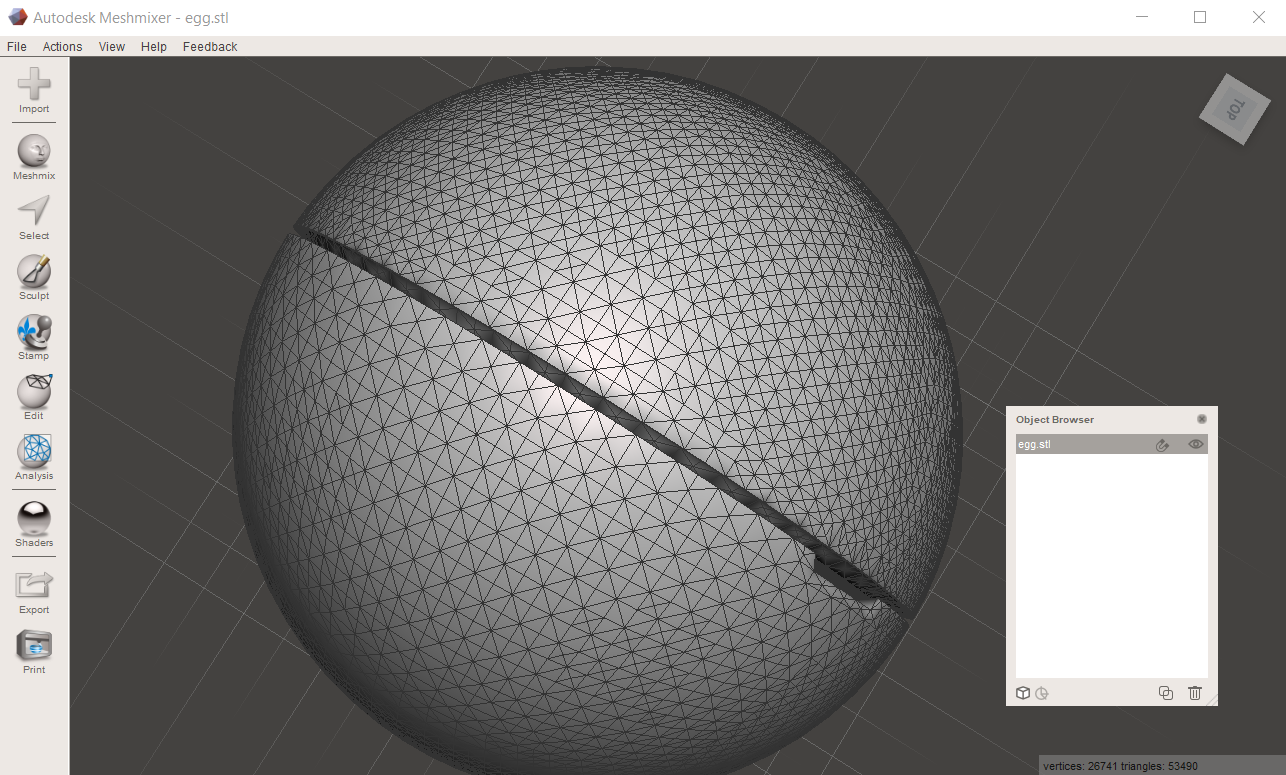
Hull didn't just invent the hardware; he also co-created the .stl file format, which remains a foundational standard in modern slicing software today (though many are now transitioning to the updated 3MF vs STL formats). He went on to found 3D Systems, one of the largest additive manufacturing companies in the world.
1989: Scott Crump and the Invention of FDM
While SLA was making waves with resin, Scott Crump took a different approach. In 1989, he patented Fused Deposition Modeling (FDM). Instead of using liquid resin and lasers, FDM melted a continuous spool of thermoplastic filament and extruded it through a heated nozzle, building the object layer by layer.
Crump founded Stratasys, and FDM quickly became the most widely recognized form of 3D printing. Understanding the difference between these early technologies is still relevant today, as makers often weigh the pros and cons of FDM vs SLA for their specific projects.
The 2000s: The Open-Source Revolution
For the first two decades of its existence, 3D printing was heavily locked behind corporate patents. The machines cost hundreds of thousands of dollars and were strictly used by automotive and aerospace engineers for rapid prototyping. That all changed in the 2000s.
The RepRap Project (2005)
In 2005, Dr. Adrian Bowyer at the University of Bath launched the RepRap (Replicating Rapid Prototyper) project. His vision was an open-source 3D printer that could print most of its own components, democratizing manufacturing. This movement birthed a massive online community of makers sharing designs, firmware, and hardware improvements.
The FDM Patent Expiration (2009)
The true catalyst for the desktop 3D printing boom occurred in 2009 when the original FDM patents filed by Stratasys expired. Suddenly, startups and open-source communities could legally build, innovate, and sell affordable FDM 3D printers. The technology moved out of the corporate warehouse and into the garage.
How Far We’ve Come: Modern 3D Printing Technology
If you look at the early open-source kits from 2010 and compare them to what sits on a maker's desk today, the leap in technology is staggering.
From Single-Color Slow Pokes to High-Speed Multi-Toolheads
Early desktop FDM printers were notoriously slow, requiring users to ask, "How long does it take to 3D print something?" Additionally, printing in multiple colors required massive, wasteful purge towers to clear a single nozzle during filament changes.
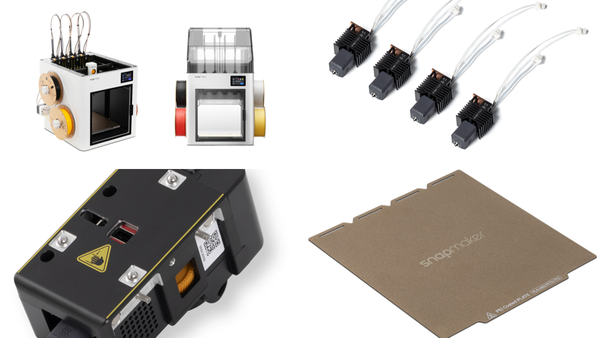
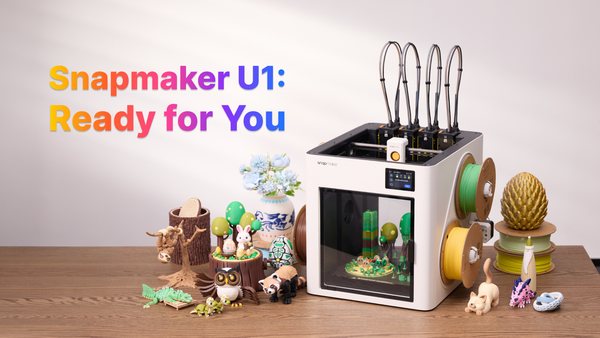
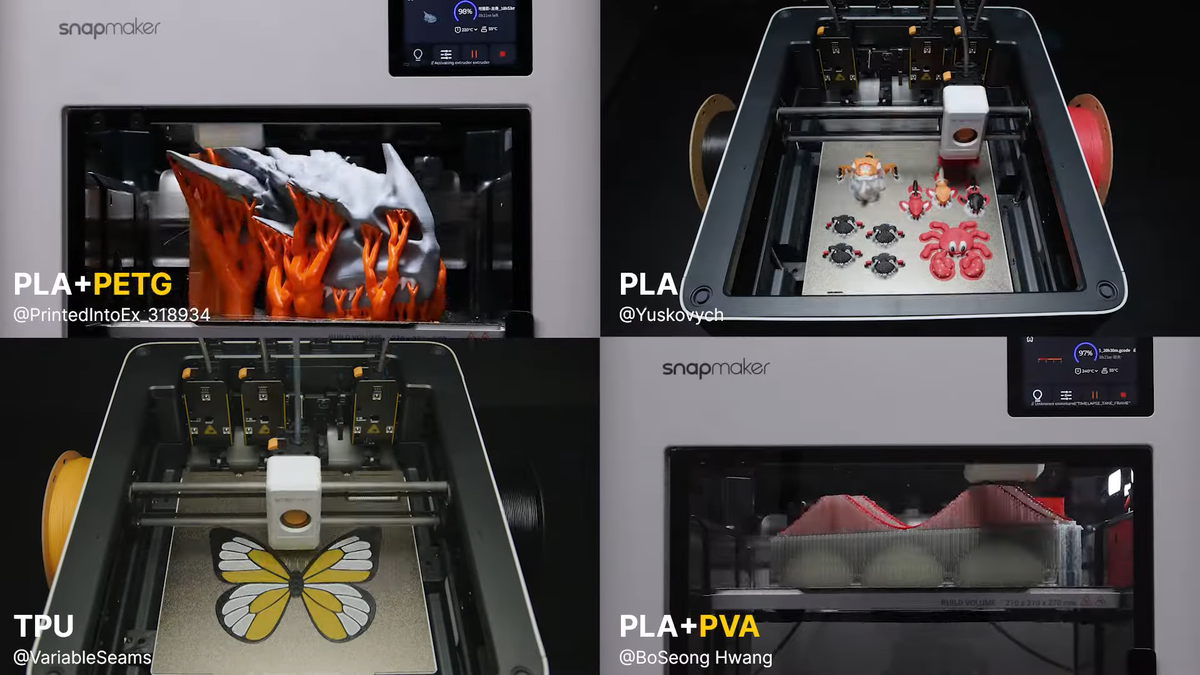
Today, those limitations have been engineered away. Modern CoreXY kinematics allow machines to comfortably hit travel speeds of 500mm/s. Furthermore, the industry has solved the multi-color waste problem through advanced tool changer 3D printers. For example, the Snapmaker U1 utilizes a SnapSwap™ system featuring four independent, pre-loaded toolheads. Instead of forcing you to understand what a purge is in 3D printing and wasting expensive material on a prime tower, the machine physically swaps hotends in just 5 seconds, drastically reducing print times and eliminating up to 80% of filament waste.
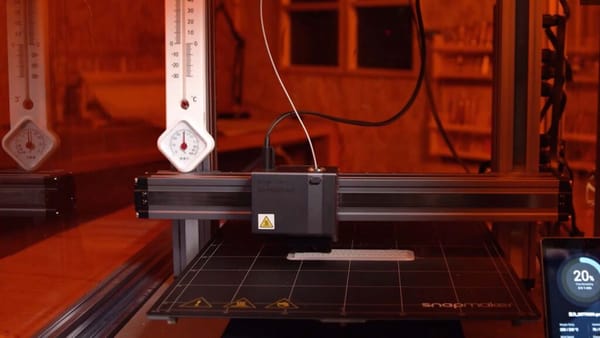
A look behind the scenes at modern 3D printer manufacturing. The rigorous lab testing and automated assembly required for today's machines (like the Snapmaker U1) are a massive leap forward from the DIY, garage-built RepRap kits of the late 2000s.
The Rise of the Desktop Micro-Factory
The definition of a desktop fabricator has also expanded well beyond melting plastic. Today, makers demand versatility.
The modern era has introduced the "3-in-1" micro-factory. Devices like the Snapmaker Artisan take the precision of high-end 3D printing and combine it with modular toolheads for laser engraving and CNC machining. This allows a single user to print a functional prototype, switch modules, and immediately mill a custom aluminum enclosure—bridging the gap between the history of CNC machines and the future of additive manufacturing on one unified workspace.
The Future of Additive Manufacturing
As 3D printing enters its fifth decade, the focus has shifted toward intelligence and sustainability. Future innovations are actively tackling the environmental impact of 3D printing by developing highly recyclable materials and completely eliminating purge waste.
Simultaneously, AI is transforming the user experience. With integrated chamber cameras running localized AI monitoring (a feature rolling out to systems like the U1), printers can now automatically detect spaghetti failures and pause themselves, ensuring that 3D printing remains a seamless, creative, and highly efficient process for the next generation of makers.