Bringing Wildlife to Life: Meet Bigshot Tinkers

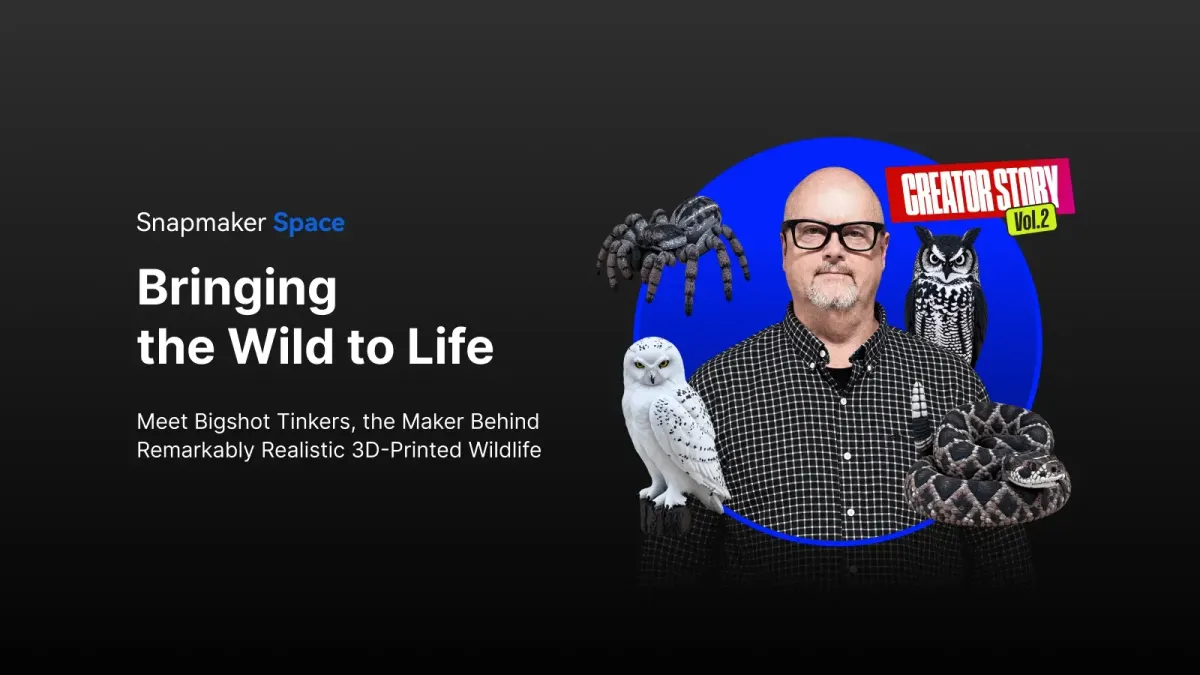
From childhood memories on a farm to lifelike multicolor creations, discover how curiosity and a love of animals shaped one maker's creative journey.
What does it take to make a 3D-printed animal look almost alive?
For Jason Black, the creator behind Bigshot Tinkers, it's about capturing the details that give each animal its character—from the watchful eyes of an owl to the intricate patterns of a rattlesnake.
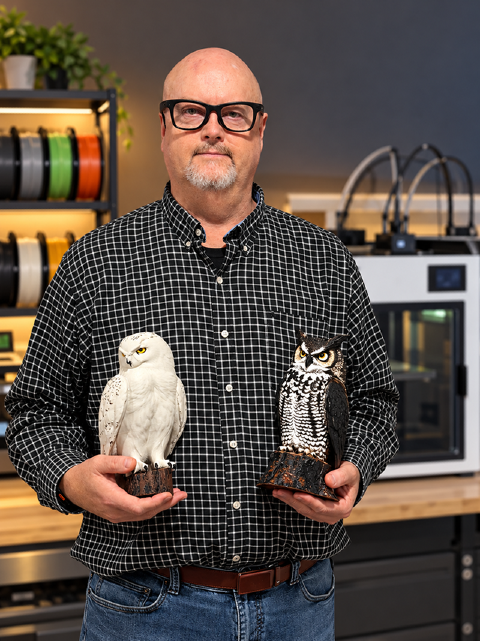
Based in Meridian, Idaho, Jason has turned a lifelong curiosity into a passion for creating realistic wildlife models. His designs combine careful attention to detail with the possibilities of multicolor 3D printing.
But behind these impressive creations is a journey that began with something deeply personal: a miniature recreation of his childhood home.
From Childhood Memories to 3D Printing
Before discovering 3D printing, Jason spent most of his career working in IT. Always curious about technology and creative hobbies, he enjoyed experimenting with new tools and learning how things worked. Photography was his main creative outlet for years.
That spirit of experimentation eventually inspired the name Bigshot Tinkers.
Although he'd been interested in 3D printing for some time, one question held him back:
"What would I even print?"
Once he finally bought his first printer, that question quickly disappeared. Fascinated by watching objects take shape layer by layer, he spent countless hours printing models, testing filaments, and learning the process.
His first meaningful modeling project came when he decided to recreate the farm where he grew up.
Using Tinkercad, Jason built a small diorama of his childhood home, complete with familiar buildings and surroundings. Having recently lost both of his parents, the project became much more than a modeling experiment. It brought back memories of a place and a time that meant so much to him.
What began as a hobby had become a new way to connect with his past.
Bringing a Love of Animals to Life
Growing up on a farm, Jason developed a strong connection with animals. His father raised sheep, and much of his childhood revolved around caring for livestock.
That connection eventually shaped his creative direction.
Inspired by playful animal models from other creators, Jason initially enjoyed printing whimsical creatures. But he soon found himself drawn toward something different: animals that looked as realistic as possible.
His journey into wildlife modeling began with an unexpected discovery.
While experimenting with 3D scanning during a vacation, Jason scanned a plastic hawk outside his rental property and eventually printed a replica. The experience sparked an idea: what if he could create a realistic owl of his own?
Exploring that possibility introduced him to AI-assisted modeling tools, allowing him to transform his ideas into increasingly ambitious designs.
One of the results was the Watchful Owl, a model that became a turning point in his creative journey.
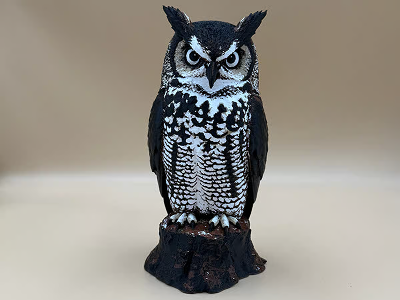
Jason still remembers being amazed by how lifelike his first owl looked, even though the printing time seemed enormous compared with his earlier projects.
Then something unexpected happened.
While dining at a restaurant, his phone suddenly filled with notifications. Photos and videos of the owl had attracted an enthusiastic response online, with people amazed by its intricate details and numerous color changes.
For Jason, it was an exciting realization: his creations could inspire others to appreciate what consumer 3D printing could achieve.
And the owl was only the beginning.
When Realism Meets the Challenge of Printing
Jason's Diamondback Rattlesnake was another creation that quickly caught people's attention.
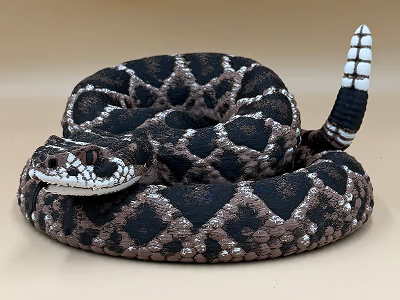
With its coiled body, distinctive markings, and realistic appearance, the model looked so convincing that even Jason found himself doing double takes when he saw it sitting on his printer.
But achieving that realism came with challenges.
The snake's delicate tongue frequently broke during printing. After several attempts, Jason found a practical solution: including a spare tongue on the build plate in case the original failed.
His early bird models presented similar difficulties. Their thin legs looked realistic but could easily break during support removal or shipping.
Through repeated testing, Jason learned to adjust geometry, print orientation, and supports to make his creations more durable without sacrificing their appearance.
The same attention goes into his creative process.
Jason embraces AI-assisted modeling tools as a way to explore ideas, but a promising digital model is only the beginning. Unexpected geometry, fragile details, difficult supports, and color choices all require careful consideration.
Even after a successful print, there's still work to do: preparing print profiles, taking photographs, and making sure others can reproduce the results.
For Jason, a great model isn't just one that looks impressive on screen. It should also be enjoyable and reliable to print.
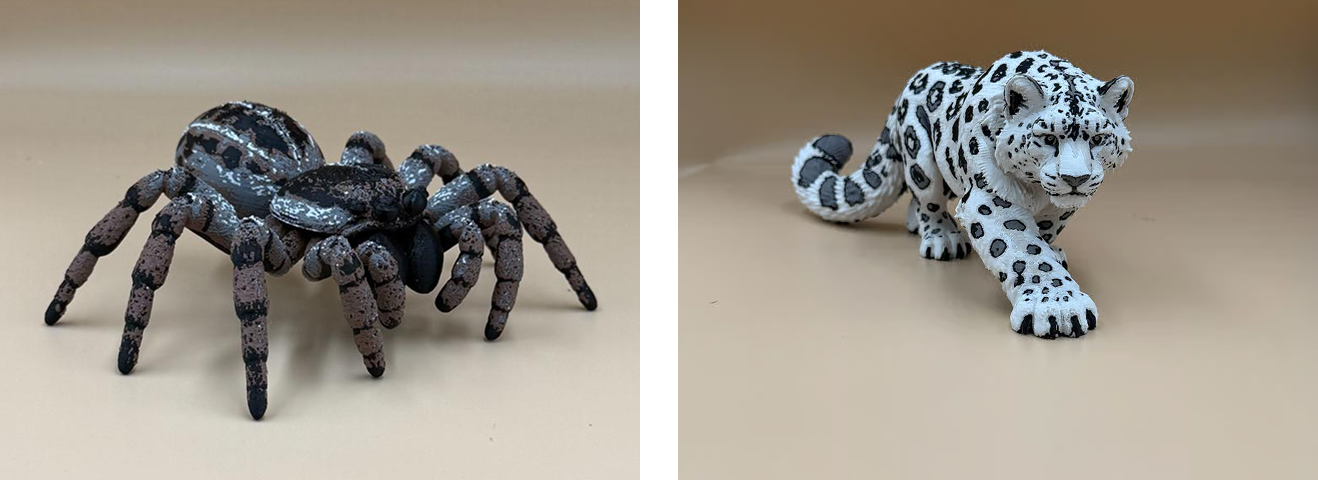
His growing collection, including the Jumping Spider and Snow Leopard, continues to challenge him to balance realism with practical printability.
Sharing the Experience on Snapmaker Space
As his collection of realistic wildlife models grew, so did Jason's community of followers and supporters.
With Snapmaker U1 becoming increasingly popular, he saw an opportunity to make his more complex creations accessible to more makers through Snapmaker Space.
Multicolor printing can feel intimidating to beginners, especially when working with detailed models that require careful settings and preparation.
By sharing tested print profiles, Jason hopes to take much of the guesswork out of the process, helping U1 owners achieve impressive results without needing to master every technical detail.
For him, sharing a model means giving someone else the satisfaction of bringing something special to life.
And sometimes, those creations carry meanings he never expected.
Recently, a customer commented on one of his horse models:
"I saw this and it reminded me of my whole childhood."
The words stayed with Jason.
After all, his own creative journey began with memories of growing up on a farm. Knowing that his designs could evoke similar feelings in someone else was a powerful reminder that 3D-printed objects can mean much more than the material they're made from.
Always Curious, Always Creating
Looking ahead, Jason is excited to explore new possibilities in color mixing and multi-material printing, bringing even greater realism and finer details to his wildlife models.
Despite everything he's learned, his advice to aspiring creators remains simple:
"Just jump in and start experimenting."
He encourages beginners to explore different tools, embrace mistakes, and start with something they genuinely enjoy creating.
From a miniature childhood farm to remarkably lifelike wildlife, Jason's journey is a reminder of where curiosity can lead.
The tools may change, and the designs may become more ambitious. But the excitement of turning an idea into something real remains the same.
And for someone who has spent a lifetime tinkering, there's always another idea waiting to come to life.
Curious to see what Jason has been creating? Explore Bigshot Tinkers' wildlife models on Snapmaker Space and discover your next printing project.