3D Printed Home Decor Ideas You’ll Actually Want to Display

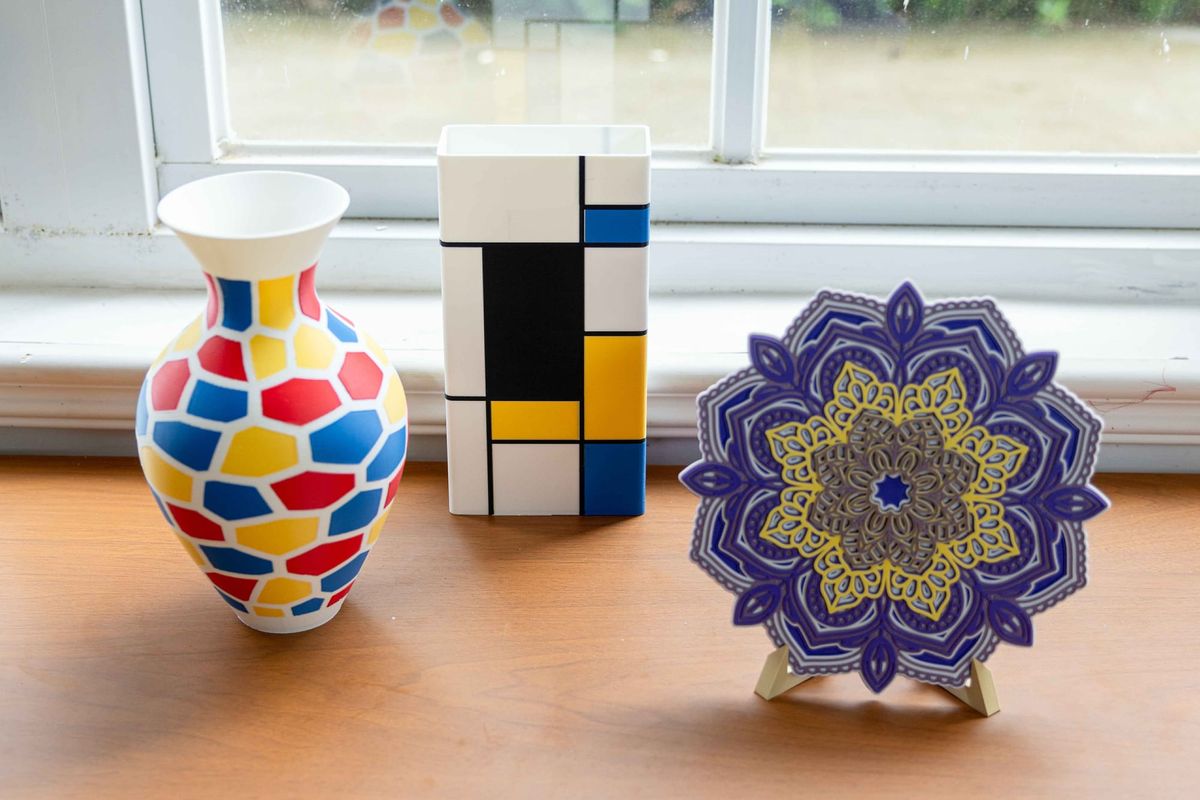
A 3D printer can do much more around the house than make toys and workshop parts. With the right model, material, and color palette, it can produce objects that feel deliberately chosen for a room—from sculptural vases and wall art to organizers that look good enough to leave on display.
The appeal of 3D printed home decor is that you are not limited to the sizes, colors, or shapes available in a store. You can resize a planter to fit one shelf, print a wall installation in your room’s exact color palette, or turn an everyday organizer into part of your desk setup.
Below are 15 3D printed home decor ideas organized by how they can fit into real living spaces, plus tips on choosing models and filament finishes that work together.
If you want an even broader look at what people are making beyond home decor, see our guide to the most popular 3D printed items.
What Makes a 3D Print Work as Home Decor?
A good model is only part of the result. For a 3D print to feel at home in a living room, bedroom, or office, think about three things before pressing Print.
- Form: A clean silhouette, intentional texture, or interesting geometry often works better as decor than a model overloaded with tiny details.
- Finish: Filament changes the character of the same STL. A neutral matte finish can make a geometric vase feel understated, while silk or dual-color PLA can turn the same shape into a statement piece.
- Context: Think about where the object will actually live. A decorative bowl belongs on an entryway console for different reasons than an organizer belongs beside a keyboard.
For a broader comparison of printing materials before choosing a finish, our 3D printer filament types guide covers the strengths and common applications of the major FDM materials.
3D Printed Living Room Decor Ideas
1. Sculptural Vases
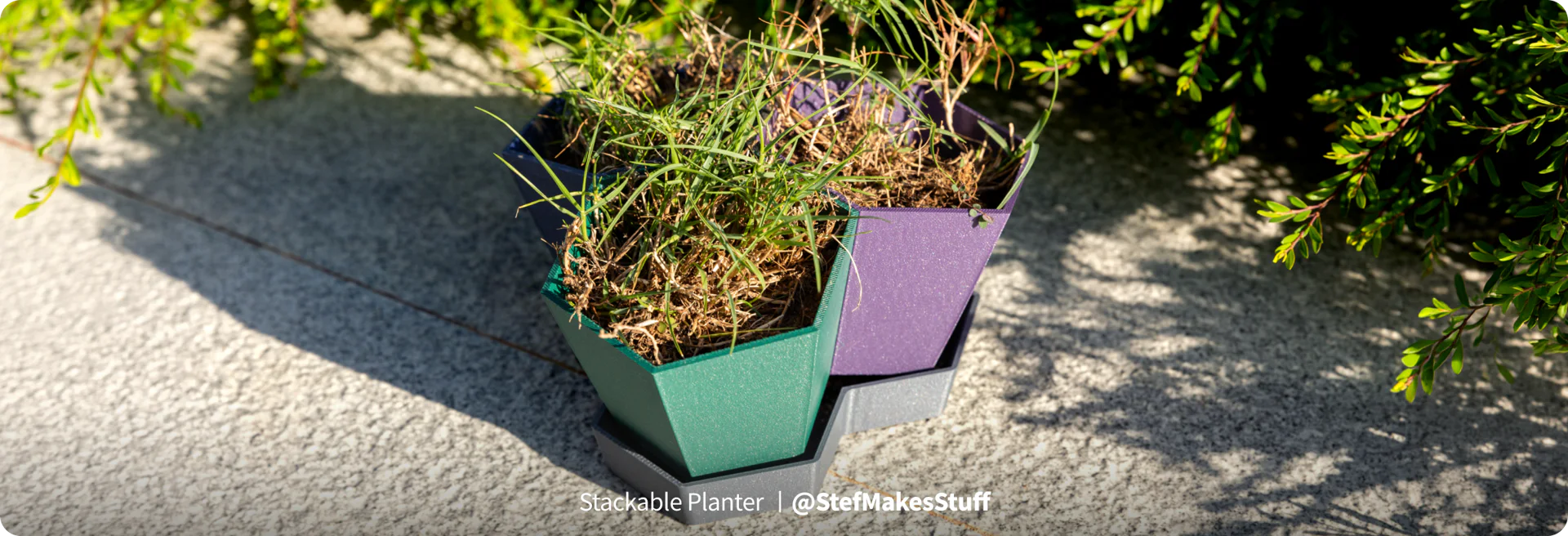
Vases are one of the easiest places to see why additive manufacturing works so well for interior decor. Spiral ribs, flowing curves, lattice structures, and asymmetric profiles can all be produced without being limited to conventional manufacturing shapes.
For a subtle shelf or console-table piece, use restrained colors and a low-gloss finish. Snapmaker Matte PLA is designed with a matte surface that helps reduce the visual prominence of layer lines, making it a natural option for minimalist decorative prints.
If a vase model has not been designed and tested to hold water, treat it as a decorative vessel for dried or artificial flowers, or place a separate watertight container inside. For tips on preventing leaks, see our guide to making 3D prints watertight.
2. Decorative Planters
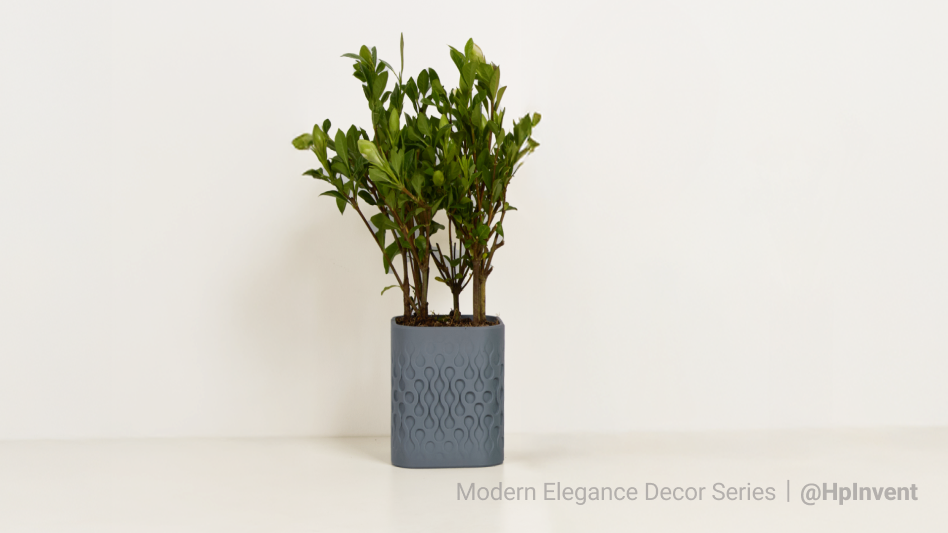
A planter does not have to be a plain cylinder. 3D printing makes it easy to experiment with faceted pots, ribbed forms, animal-inspired designs, modular planters, or containers sized around a particular windowsill.
This is also a good place to use texture. A model with strong surface geometry can look completely different when printed in a muted earth tone rather than a bright standard PLA.
For something more natural in appearance, Snapmaker Wood PLA combines PLA with natural wood fibers and supports sanding, painting, and staining after printing.
3. Abstract Sculptures
Not every 3D print needs a practical purpose.
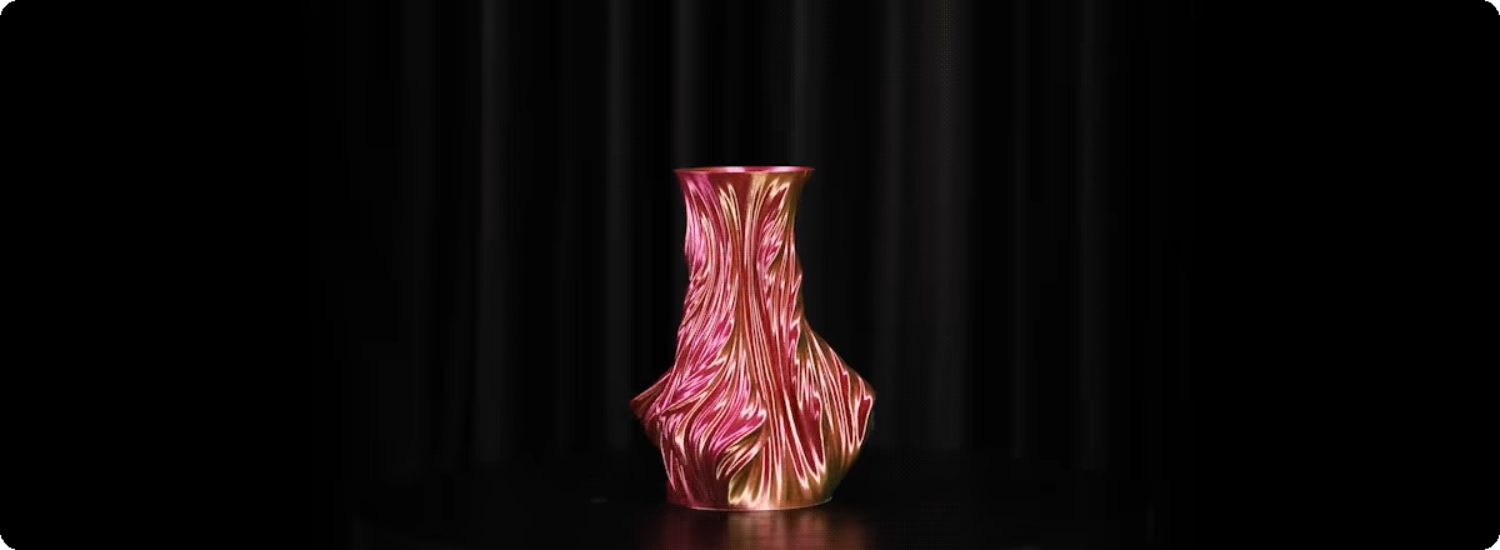
Organic forms, mathematical structures, twisted columns, minimalist figures, and impossible-looking geometric objects can all work as shelf decor. These projects are especially useful when you want an object that would be difficult to reproduce with ordinary DIY methods.
Try limiting the color palette and letting the geometry do the visual work. If the model relies heavily on highlights and reflections, a glossy filament can push it in the opposite direction and make it a deliberate focal point.
4. Decorative Bowls and Catch-All Trays
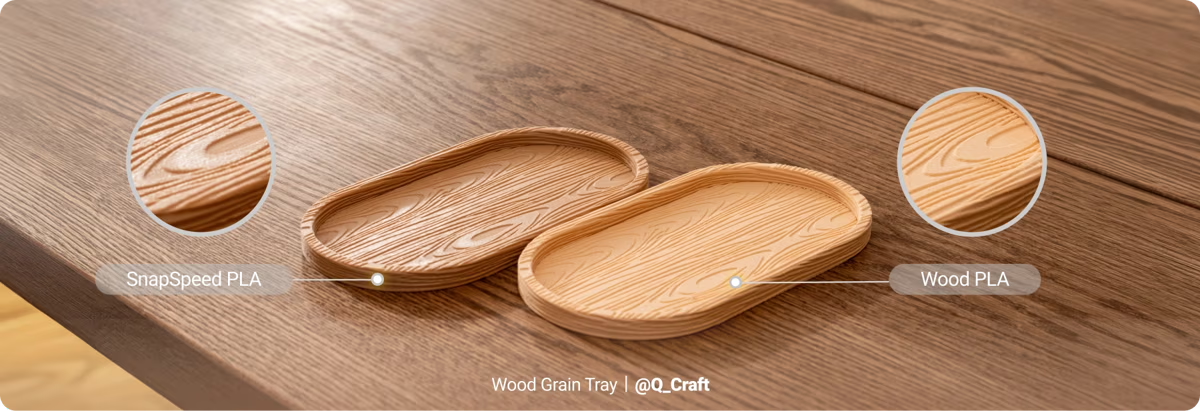
Some of the best home decor sits between useful and decorative.
A small tray can collect keys in an entryway, jewelry on a dresser, or everyday items on a desk while still contributing to the room’s look. Because the model is digital, it is also easy to adjust dimensions for the exact objects you want it to hold.
This is the same principle behind many useful things to 3D print: customization becomes most valuable when the object fits a specific routine or space rather than an imagined “average” user.
5. Lampshades and Ambient-Light Decor
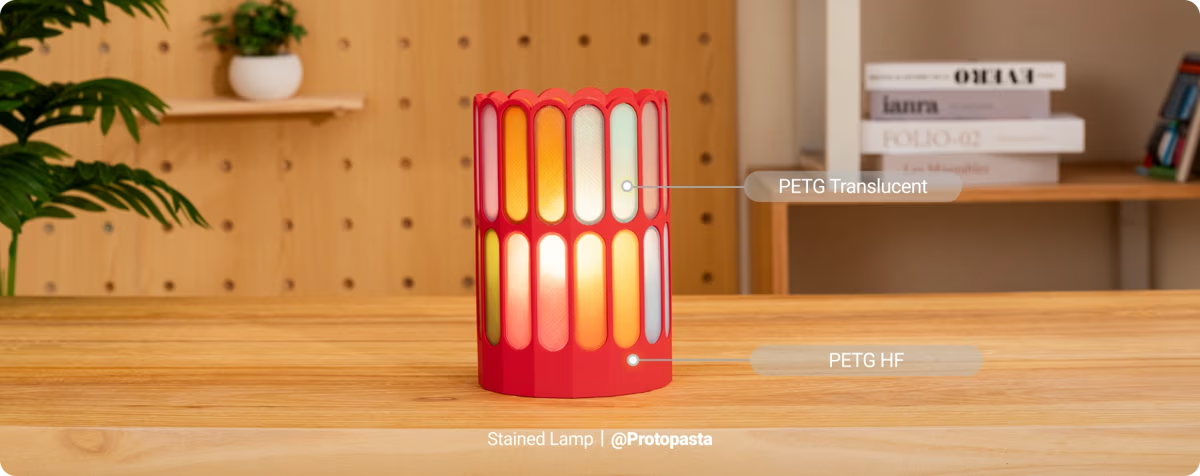
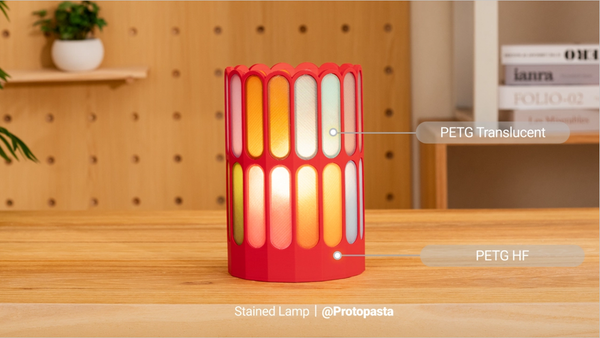
Light reveals 3D printed textures in a way ordinary shelf lighting cannot. Repeating perforations, thin ribs, patterned surfaces, and translucent shells can create interesting shadows or softly diffused light.
For designs intended to transmit light, material choice matters. Snapmaker PETG Translucent can be adjusted through wall-loop settings to produce clearer or more diffused effects and is positioned for applications including lampshades and light diffusers.
Always follow the model designer’s recommendations and use a lighting setup appropriate for the printed material rather than assuming a decorative filament is suitable near a high-heat source.
3D Printed Wall Decor Ideas
Wall decor is a natural fit for 3D printing because it can turn simple surfaces into something more personal and dimensional. From geometric wall art and sculptural shelves to name signs, organizers, and other custom pieces, 3D printing opens up plenty of ways to add functional or decorative details to a room.
6. Geometric Wall Art
Instead of treating the print bed as a size limit, use it as a module.
Geometric wall art can be divided into repeatable tiles or panels and assembled into a much larger composition after printing. That makes it possible to create a feature piece for an empty wall even when each individual part is relatively small.
You can keep every panel the same color for a quiet architectural look or introduce two or three coordinated shades for more depth.
7. Relief and Layered Wall Art
Flat posters are not the only way to decorate a wall.
Topographic reliefs, stylized landscapes, architectural forms, layered maps, waves, and abstract depth patterns use the Z-axis as part of the artwork. Directional lighting then creates shadows across the raised surfaces, so the piece changes slightly through the day.
This is one area where a clean final surface matters. If support marks or visible seams distract from the design, our guide to 3D printing post-processing covers sanding, filling, painting, and other finishing methods.
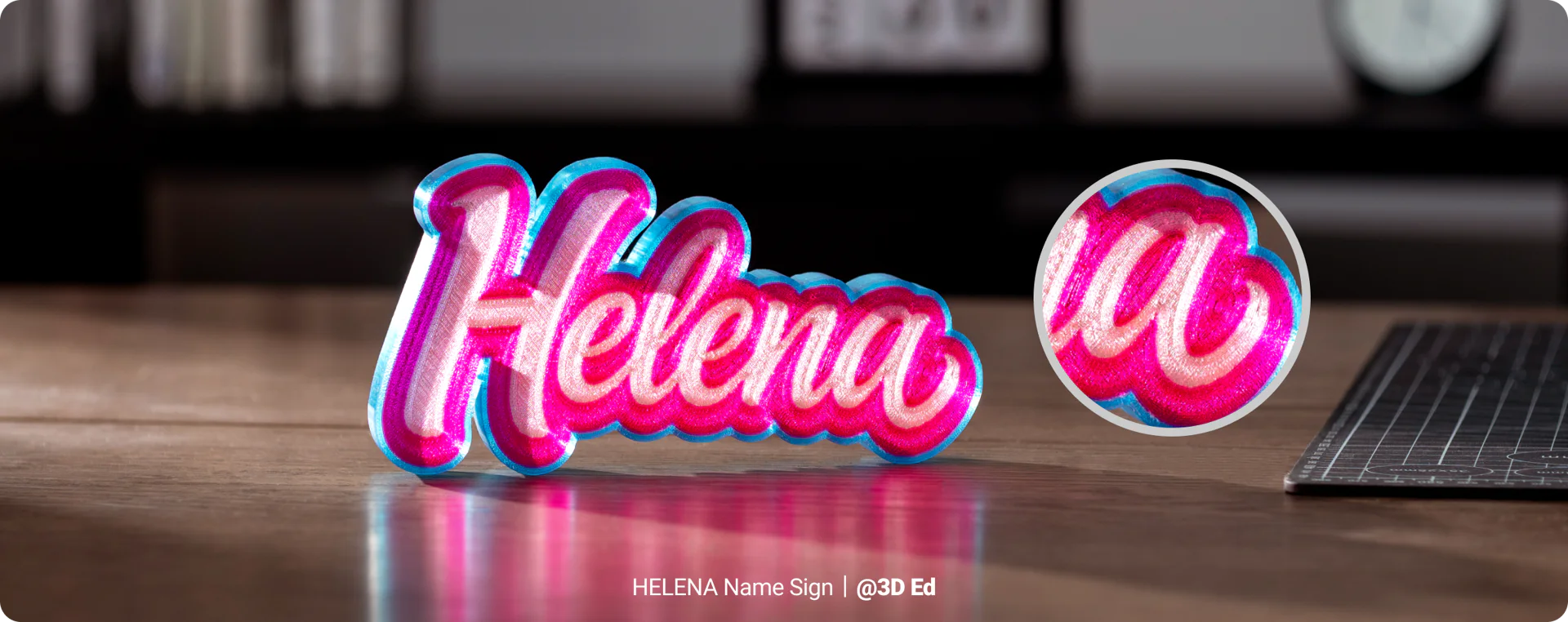
8. Personalized Name and Family Signs
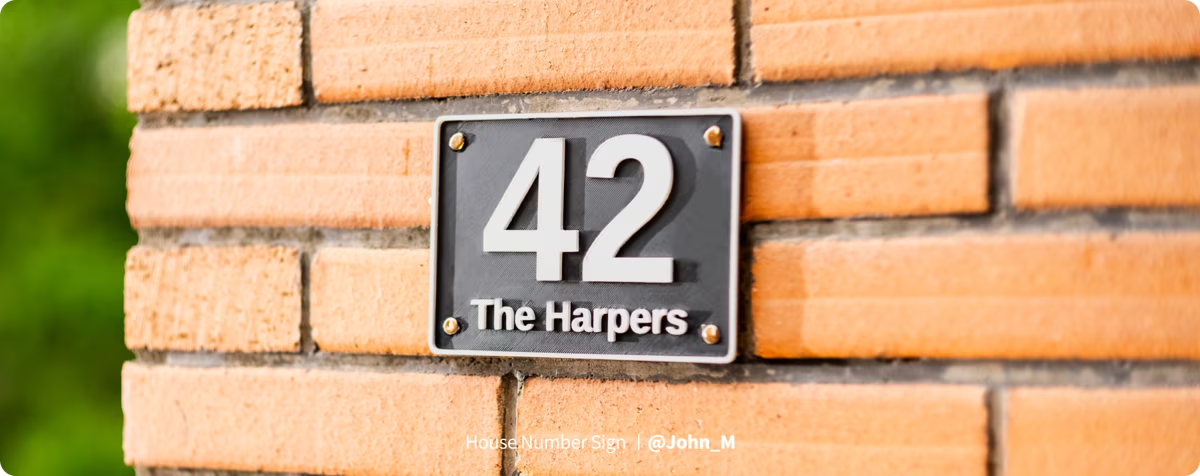
Personalization is one of the clearest advantages of making your own decor.
A digital sign can incorporate a family name, house number, meaningful date, short phrase, or room label without needing a completely different manufacturing process. Font, dimensions, backing shape, and color can all be adapted before printing.
For designs where different letters, borders, or graphic elements need distinct colors, multicolor printing can eliminate much of the manual painting afterward. You can see examples and printing approaches in our guide to inspiring multicolor 3D prints.
9. Small Decorative Wall Shelves
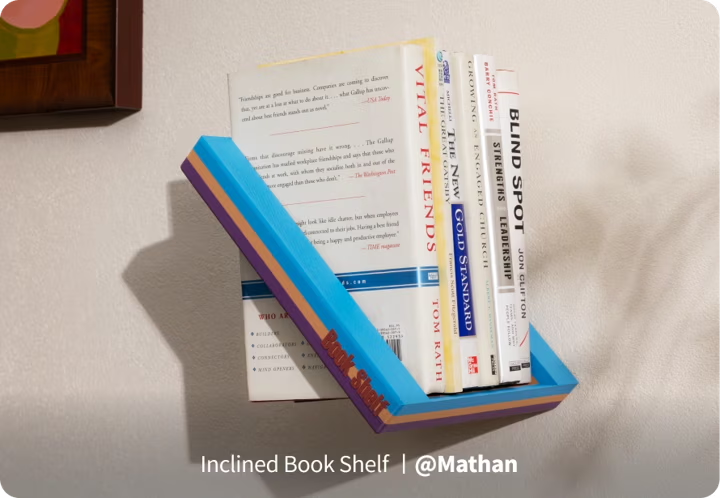
A small wall-mounted ledge can serve as both storage and decor for lightweight items such as miniatures, small artificial plants, or collectibles.
The visual opportunity comes from treating the shelf itself as part of the design. Instead of a plain rectangular bracket, the support can become a branch, wave, geometric structure, or sculptural form.
For anything expected to carry meaningful weight, however, do not judge strength by appearance alone. Wall count, orientation, material, fasteners, and the wall itself all affect performance. Our guide to 3D printer wall thickness explains why outer walls are particularly important for part strength.
3D Printed Bedroom and Home Office Decor
10. Desk Organizers That Match Your Setup
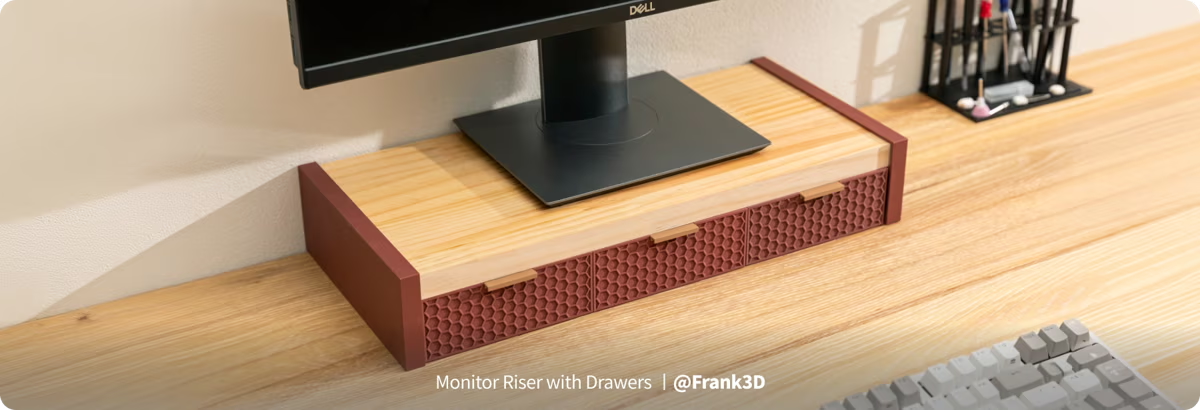
Desk organizers are practical, but they do not have to look like workshop storage.
You can build a modular system around the objects already on your desk: pens, memory cards, charging cables, controllers, notebooks, or small electronics. Then choose filament colors that match the keyboard, desk mat, shelving, or room.
This is where functional printing and room styling overlap. Instead of adding another plastic container to the desk, you are designing the container as part of the setup.
11. Headphone and Accessory Stands
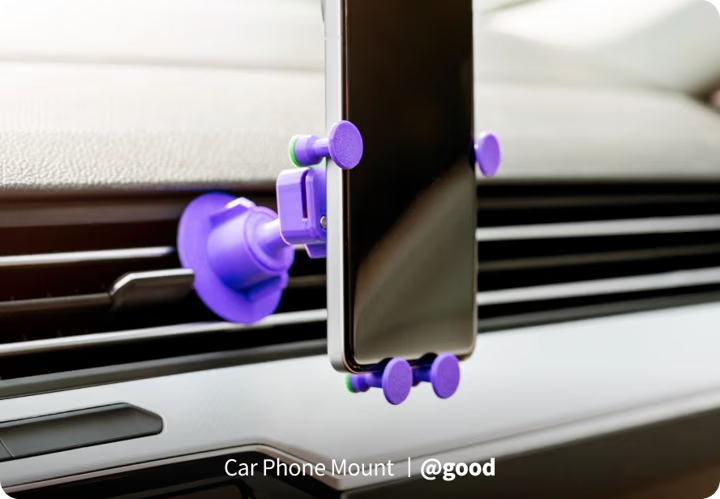
A headphone holder can be little more than a hook—or it can become the most noticeable object beside a computer.
Character-inspired stands, sculptural forms, architectural shapes, and clean minimalist holders all turn an ordinary accessory into part of the desktop display. Snapmaker Space already includes Household projects that blur this boundary between practical object and decoration, which makes this category particularly useful for exploring different design approaches.
12. Bookends
Bookends are ideal for 3D printing because the pair itself can tell a visual story.
Two sides of a landscape, matching geometric forms, architectural silhouettes, or complementary abstract pieces can frame a shelf while keeping books upright. Since both parts originate from a digital design, the pair can be mirrored, scaled, or modified without starting over.
Keep the real workload in mind: tall hardcovers need a more stable design than a small row of paperbacks.
13. Desktop Botanical Decor
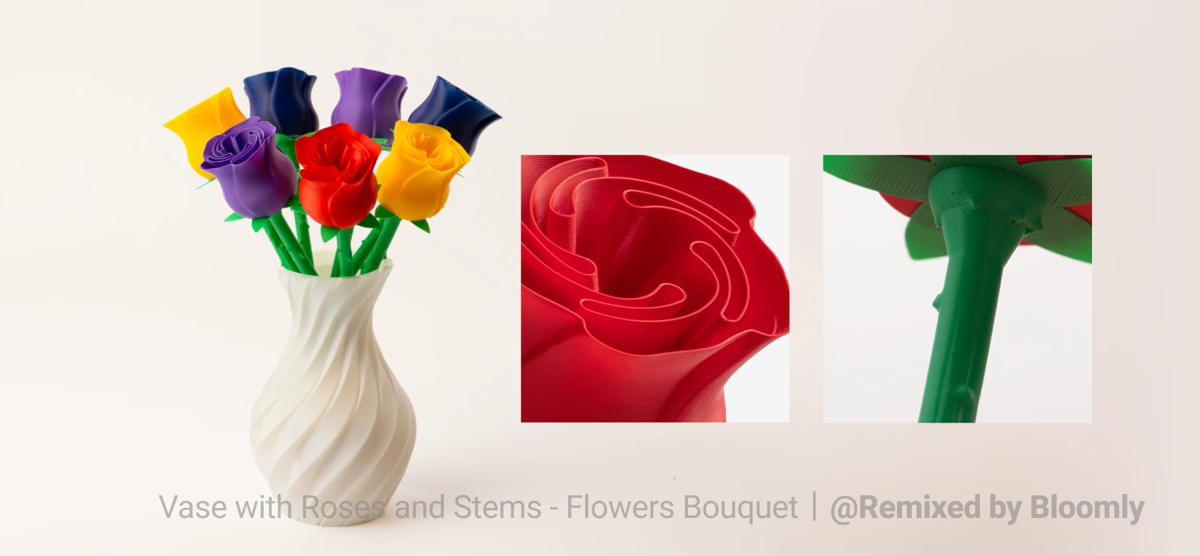
Not every plant-like object has to contain a real plant.
Printed leaves, flowers, stylized botanical sculptures, miniature gardens, and modular planters can add shape and color to areas where maintaining live plants is inconvenient.
This is also a useful place to experiment with multiple colors. Snapmaker Silk Dual-Color PLA changes the visible color effect with viewing angle, making it particularly suited to curved or textured decorative objects.
Personalized and Seasonal 3D Printed Decorations
14. Photo Frames and Memory Displays
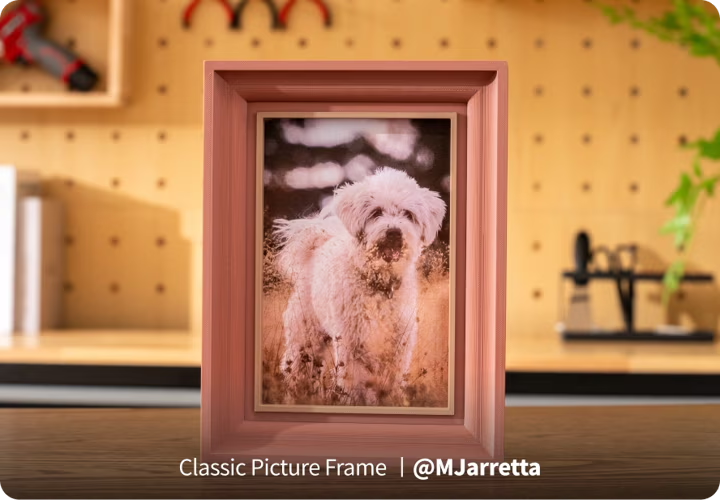
A printed photo frame can be designed around the photograph instead of forcing the photograph into a standard store-bought frame.
Add initials, a date, a location name, a geometric border, or a small stand. For a group of photos, create a modular system that can expand as more memories are added.
The strongest designs usually keep the customization meaningful rather than simply adding more ornament.
15. Seasonal Decor You Can Reprint in New Colors
Seasonal decorations are especially well suited to digital files because the same design can come back every year—or be changed without buying an entirely new object.
Pumpkins, winter ornaments, table pieces, door signs, spring decorations, and small shelf displays can all be recolored or resized for a new arrangement.
Multicolor models can take this further. Snapmaker Silk PLA and other visually distinctive materials can make small decorative objects feel less like prototypes and more like deliberate display pieces.
From Inspiration to a Printable Model
Once you know what you want to make, there are two ways forward.
You can design the object yourself, which gives you complete control over its dimensions, function, and visual style. This works particularly well when the whole point of the project is to fit an awkward shelf, match an existing object, or solve a very specific storage problem.
Or you can start with an existing printable model.
That is where Snapmaker Space comes in. Space is our growing 3D model platform, with categories including Household and Decor for discovering printable projects. The platform entered open beta in September 2026 and launched that stage with more than 2,500 models; it is still being developed and expanded. Featured models are reviewed and test-printed, with profiles prepared around the Snapmaker U1.
If you want to see what is currently being built around the platform and why it is still labeled Beta, read Snapmaker Space Beta Is Now Open to All.
When choosing a downloadable model, look beyond the thumbnail. Check the finished dimensions, recommended material, support requirements, number of parts, printing profile, and license before starting.
Choose the Filament for the Look, Not Just the Print
For decorative projects, filament is part of the design decision.
The same vase can feel like three completely different objects depending on whether it is printed in a muted matte finish, reflective silk, or a wood-filled material.
You can also browse the broader Snapmaker filament range on the US store when choosing colors and materials for a project.
A simple rule helps: choose the finish at the same time you choose the model. Do not wait until the STL is already sliced to think about how the object should look in the room.
If you want to go further into material behavior rather than appearance alone, our PLA vs. PETG comparison explains where the two materials differ in practical use.
Before You Print: Four Practical Checks
- Check the finished size. A model that looks perfectly proportioned on a screen may be much smaller—or larger—than you expect when printed.
- Look at supports and visible surfaces. Think about where supports will touch the model and whether those areas will still be visible after the object is placed in the room.
- Choose colors before slicing. For multicolor home decor, color placement can be just as important as geometry. If you want to print several colors directly rather than paint afterward, the Snapmaker U1 uses four toolheads for multi-color and multi-material printing.
- Match construction to use. A lightweight display object has very different requirements from a shelf, planter, or other functional part. Treat decorative appearance and engineering performance as separate questions.
Make Decor That Fits Your Space
The real advantage of 3D printing home decor is not simply that you can make another vase or organizer. It is that you can change the dimensions, geometry, color, finish, and function until the object belongs in your space.
Start with one place in your home that feels unfinished—a blank wall, an empty shelf, a cluttered desk, or a corner that needs color. Pick the object first, choose a material that supports the look, and then find or create a model that fits.
When you are ready to look for the next project, explore Snapmaker Space for printable models, or browse our guides on what you can print with a 3D printer for ideas beyond home decor.
FAQ About 3D Printed Home Decor
What are some good 3D prints for home decor?
Vases, planters, geometric wall art, relief panels, sculptures, trays, organizers, bookends, signs, photo frames, and seasonal decorations are all good starting points. The best choice depends on both the room and whether you want the print to be purely decorative or functional as well.
What filament is best for 3D printed home decor?
There is no single best filament for every project. Standard or matte PLA works well for many indoor display pieces because it is straightforward to print, while silk filaments emphasize reflections and curves. Wood PLA can create a more natural surface, and translucent materials are useful when the design interacts with light.
Where can I find 3D printed home decor models?
You can design your own models or browse a model platform. Snapmaker Space includes a Household > Decor category alongside other model categories and continues to expand during Beta.
Can I sell home decor printed from a downloaded model?
Only if the model’s license allows it. A downloadable file being free does not automatically grant commercial rights. Check the specific license attached to the model before selling physical prints.
If selling prints is part of your plan, our guide to selling 3D printed items legally explains Creative Commons licenses, commercial permissions, and other issues to check before listing a product.